BioHarmonizing Your Energy: The Ultimate Guide to Vitamin B1 Forms & Deficiency
True energy isn’t something you force into your body. It’s something you restore, realign, and Bioharmonize.
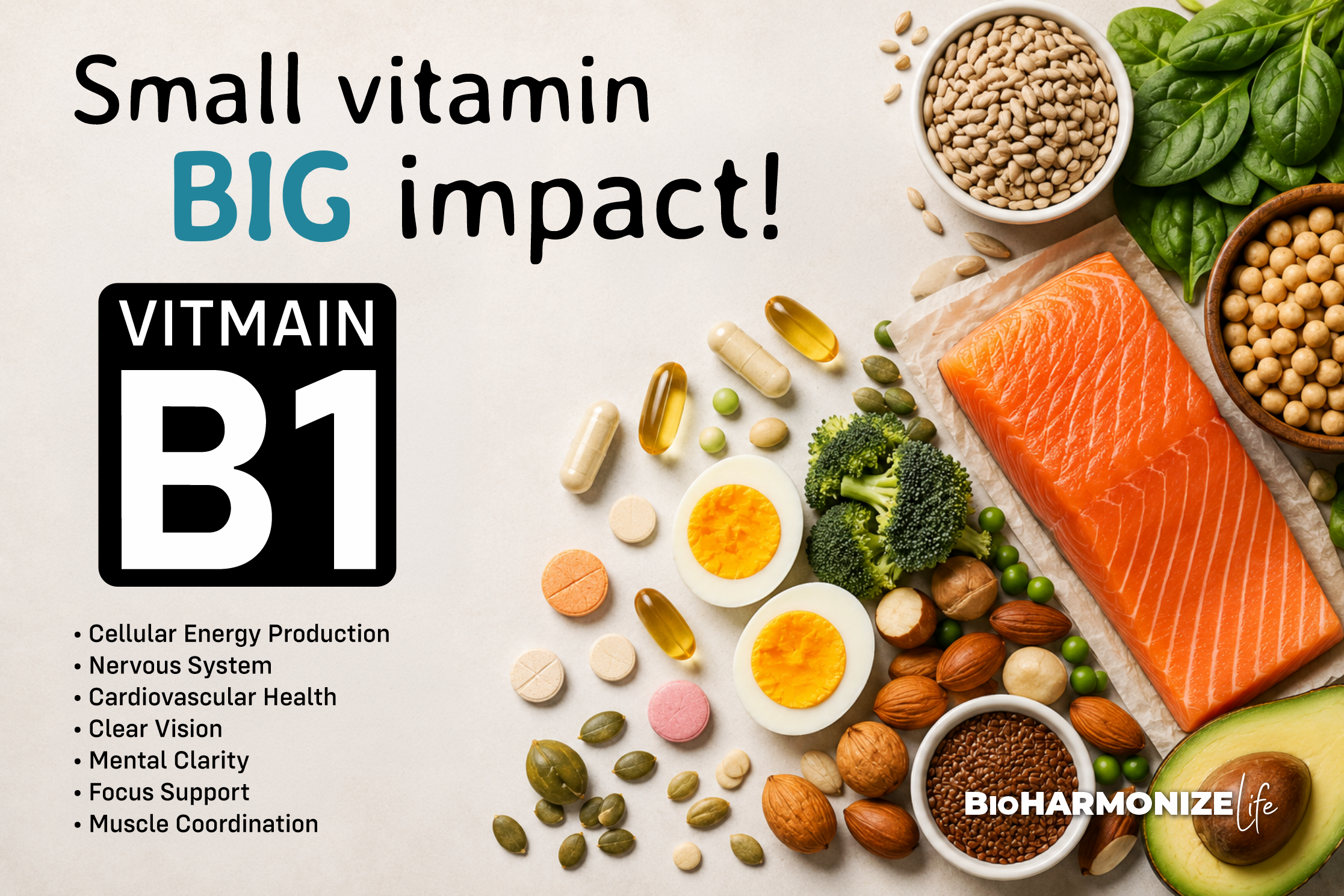
Vitamin B1 (Thiamine) sits at the center of that restoration. It’s the ignition switch for mitochondrial energy production — the spark that helps convert the food you eat into ATP, the currency of cellular vitality. When B1 is low, your metabolic engine sputters. When B1 is abundant and bioavailable, your system hums with clarity, steadiness, and resilience.
Modern living quietly drains B1: refined carbohydrates, chronic stress, alcohol, environmental toxins, and stimulant‑heavy routines all increase demand. Research indexed in PubMed and GreenMedInfo consistently links thiamine deficiency to fatigue, neuropathy, cognitive fog, metabolic dysfunction, and impaired glucose regulation.
To BioHarmonize your energy, you must understand the forms of B1 — because not all thiamine behaves the same in the body.
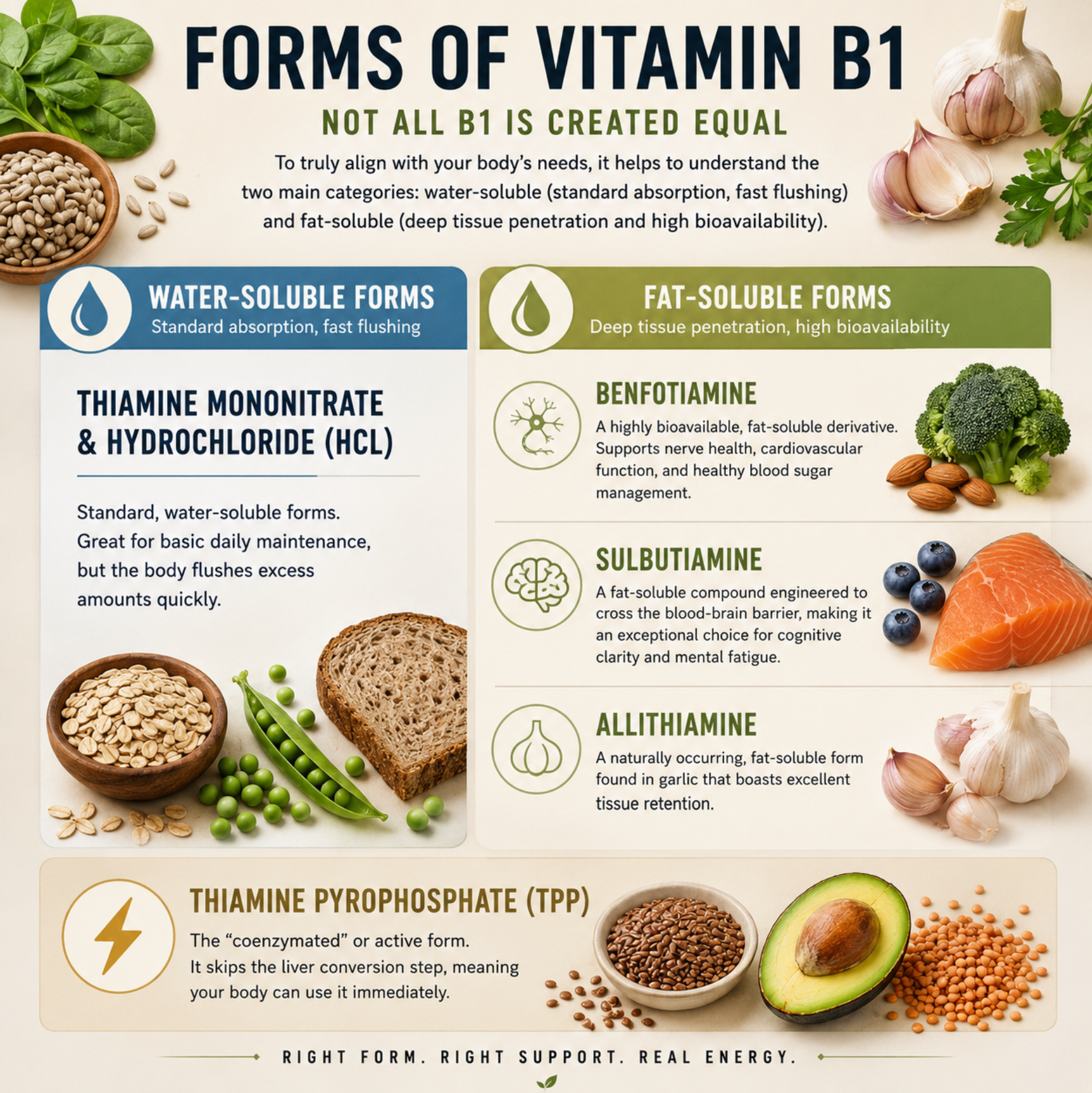
Quick Glance: The Forms of Vitamin B1
Water‑soluble for rapid support. Fat‑soluble for deep tissue penetration. Active forms for immediate use.
Below is a clean, expandable list you can build into individual blog sections later.
Water‑Soluble Forms (Standard Thiamine)
These forms dissolve easily in water, absorb quickly, and flush rapidly. Ideal for foundational daily support.
- Thiamine Hydrochloride (HCl) The most common supplemental form. Reliable, inexpensive, and widely studied. Supports general metabolic function.
- Thiamine Mononitrate Another standard form used in fortified foods and supplements. Stable, predictable absorption.
Fat‑Soluble Forms (Advanced Bioavailability)
These forms cross cell membranes more efficiently, remain longer in tissues, and offer targeted therapeutic benefits.
- Benfotiamine A highly bioavailable derivative shown in PubMed studies to support nerve health, endothelial function, and healthy glucose metabolism. Excellent for metabolic resilience.
- Sulbutiamine Engineered to cross the blood‑brain barrier. Known for enhancing mental clarity, reducing fatigue, and supporting neurotransmitter balance.
- Allithiamine (Thiamine Tetrahydrofurfuryl Disulfide) A naturally occurring thiamine derivative found in garlic. Fat‑soluble, long‑lasting, and supportive of both neurological and digestive function.
Activated Form (Ready‑to‑Use)
These forms bypass the liver’s conversion step, making them immediately available to cells.
- Thiamine Pyrophosphate (TPP) Also called Thiamine Diphosphate. This is the coenzymated form your mitochondria use directly. Supports carbohydrate metabolism, nerve conduction, and enzymatic reactions essential for ATP production.
Signs Your System Is Running Low on B1 (Deficiency)
Thiamine (Vitamin B1) is one of the body’s most energy‑intensive nutrients. Your heart, brain, and nervous system burn through it rapidly because they rely on constant ATP production to stay regulated, responsive, and resilient.
When B1 runs low, the body doesn’t simply “get tired.” It experiences a system‑wide brownout — a dimming of electrical, metabolic, and neurological power.
Below are the most common patterns people experience when their system is quietly starving for thiamine harmony.
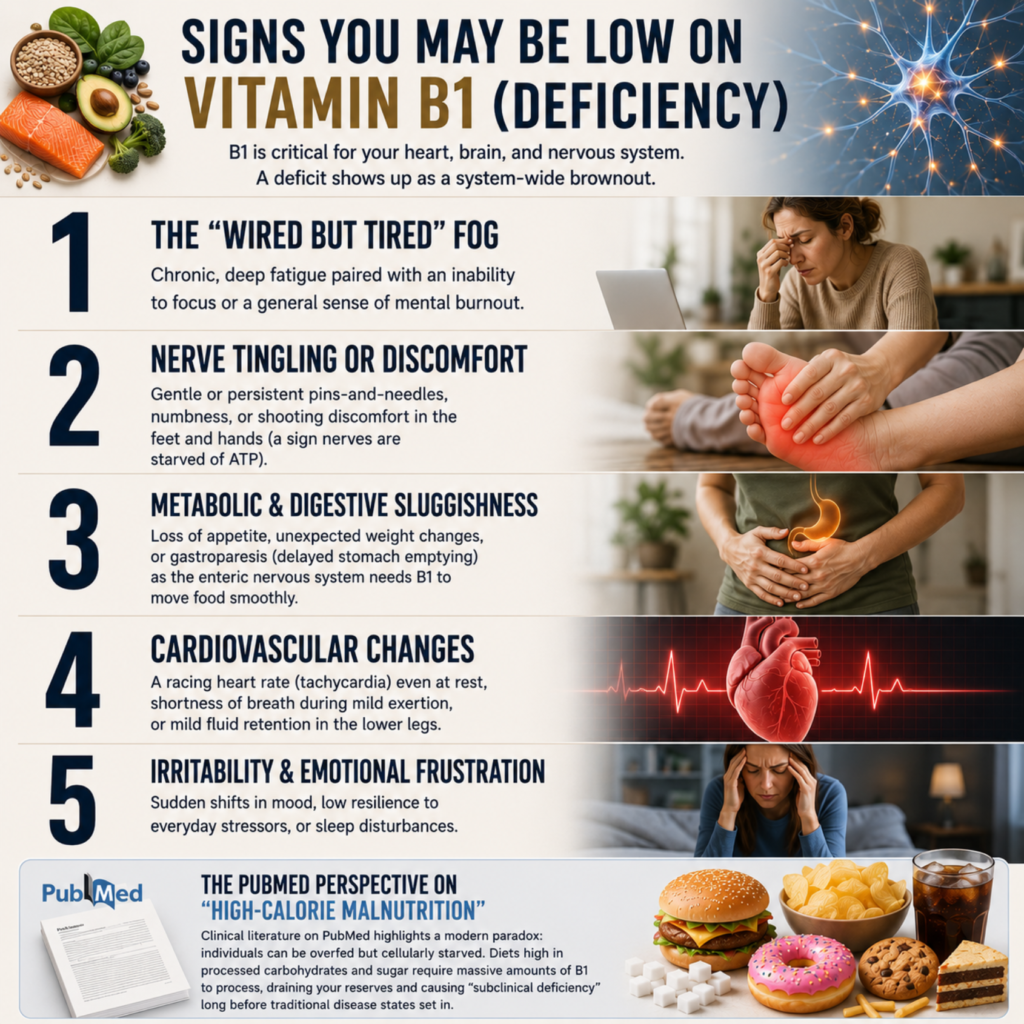
The “Wired but Tired” Fog
A paradoxical mix of exhaustion and overstimulation.
You may feel:
- Deep, unshakeable fatigue
- Difficulty focusing
- Mental burnout
- A sense of being “on” but not productive
This pattern often reflects mitochondrial sluggishness: the brain is trying to fire, but the energy supply isn’t keeping up.
Nerve Tingling or Discomfort
Your peripheral nerves are among the first to signal low B1.
You may notice:
- Pins‑and‑needles sensations
- Numbness in hands or feet
- Shooting or buzzing discomfort
These nerves require constant ATP to maintain conduction. When thiamine drops, the electrical signals weaken.
Metabolic & Digestive Sluggishness
Thiamine fuels the enteric nervous system — the “second brain” that moves food through the GI tract.
Signs may include:
- Loss of appetite
- Unexpected weight changes
- Bloating or slow digestion
- Gastroparesis‑like symptoms (delayed stomach emptying)
Without adequate B1, the gut’s rhythmic contractions lose their coordination.
Cardiovascular Changes
The heart is a thiamine‑hungry organ.
You may experience:
- A racing heart rate (tachycardia) even at rest
- Shortness of breath during mild exertion
- Mild swelling in the lower legs
These patterns reflect the heart working harder to compensate for low cellular energy.
Irritability & Emotional Frustration
Thiamine plays a role in neurotransmitter balance and stress resilience.
You may feel:
- Mood swings
- Lower tolerance for everyday stress
- Sleep disturbances
- Emotional volatility
When energy drops, emotional regulation becomes harder.
The PubMed Perspective: “High‑Calorie Malnutrition”
Modern research highlights a striking paradox: You can be overfed but undernourished at the cellular level.
PubMed‑indexed studies show that diets high in:
- Processed carbohydrates
- Sugary foods
- Alcohol
- Ultra‑refined ingredients
require massive amounts of thiamine to metabolize. This creates a state of subclinical deficiency — meaning the body is struggling long before traditional deficiency diseases appear.
This is why people can feel exhausted, foggy, inflamed, or dysregulated even when they’re eating plenty of calories. The body is drowning in fuel but starving for the nutrient required to process it.
Why This Matters for BioHarmonizing
Thiamine deficiency doesn’t show up as one single symptom. It shows up as a pattern — a constellation of energy‑related signals across the brain, nerves, heart, and metabolism.
Recognizing these early signs allows you to restore harmony before deeper dysfunction sets in.
Deep Dive: Choosing the Right B1 for Your Body’s Design
BioHarmonizing your energy isn’t about taking “more” vitamins — it’s about choosing the right molecular form that speaks your body’s language. Each form of thiamine behaves differently inside your cells, crosses different biological barriers, and supports different aspects of your physiology.
Below is the most comprehensive, design‑aligned breakdown of the major B1 forms, integrating clinical insights from PubMed and whole‑food intelligence highlighted in GreenMedInfo.
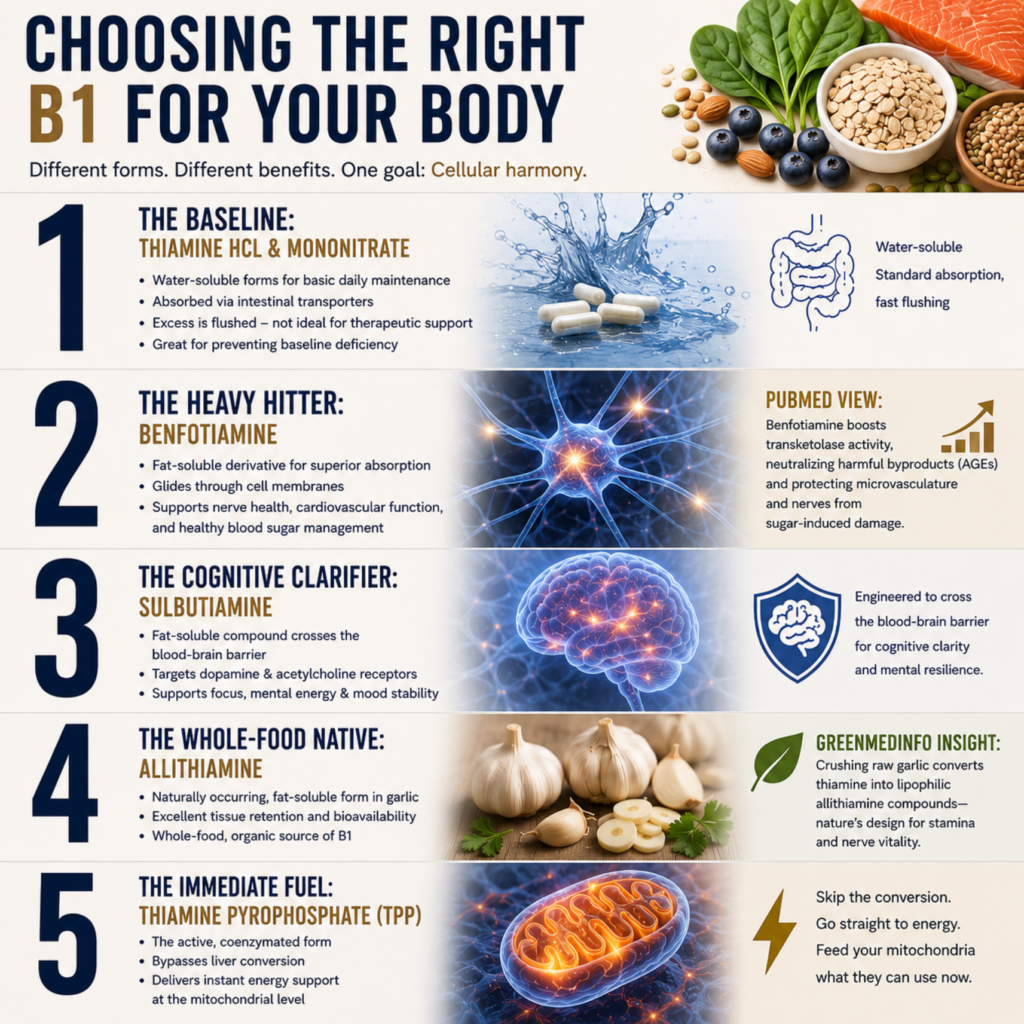
1. The Baseline: Thiamine HCl & Thiamine Mononitrate
Category: Water‑soluble, foundational Best for: Preventing deficiency, basic metabolic support
These are the classic forms found in multivitamins and fortified foods. They rely on specific intestinal transporters to enter the bloodstream — and those transporters saturate quickly. This means:
- You absorb what you need
- You flush what you don’t
- Large doses don’t necessarily translate to deeper cellular penetration
They are excellent for baseline prevention, but they are not the heavy hitters when you need targeted neurological, metabolic, or mitochondrial support.
BioHarmonize Insight: Use these forms when you want to maintain harmony — not when you need to restore it.
2. The Heavy Hitter for Nerves & Metabolism: Benfotiamine
Category: Fat‑soluble, high‑bioavailability Best for: Nerve vitality, metabolic resilience, sugar‑related stress
Benfotiamine is a standout because it bypasses the limitations of water‑soluble thiamine. Being fat‑soluble, it slides directly through cell membranes, achieving dramatically higher tissue concentrations.
The PubMed View on Nerve Protection
PubMed‑indexed studies consistently show that Benfotiamine:
- Boosts transketolase activity, a key enzyme in glucose metabolism
- Neutralizes harmful sugar byproducts, including AGEs (Advanced Glycation End‑products)
- Protects microvascular systems from sugar‑induced oxidative stress
- Supports peripheral nerve integrity under metabolic strain
This makes Benfotiamine a powerful ally for individuals experiencing nerve tingling, metabolic sluggishness, or high‑carbohydrate lifestyle stress.
BioHarmonize Insight: Choose Benfotiamine when your physical structure — nerves, circulation, metabolism — needs deep, restorative support.
3. The Cognitive Clarifier: Sulbutiamine
Category: Fat‑soluble, brain‑penetrant Best for: Mental fatigue, cognitive fog, mood stability
Sulbutiamine is engineered for the brain. Its unique structure — two thiamine molecules bound together — allows it to dissolve through the blood‑brain barrier, something standard thiamine struggles to do.
Once inside the brain, Sulbutiamine influences:
- Dopamine pathways (motivation, drive, mental stamina)
- Acetylcholine pathways (memory, learning, focus)
Holistic practitioners often use it to support:
- Cognitive clarity
- Mental endurance
- Emotional steadiness
- Recovery from overstimulation
BioHarmonize Insight: Choose Sulbutiamine when your mind feels dimmed, scattered, or chronically fatigued — and you need clarity without stimulation.
4. The Whole‑Food Native: Allithiamine
Category: Naturally occurring fat‑soluble thiamine Best for: Gentle, long‑lasting energy; digestive‑neurological synergy
Allithiamine is nature’s own fat‑soluble B1, discovered in allium plants like garlic. It offers similar high absorption to Benfotiamine but comes from a whole‑food blueprint.
The GreenMedInfo Perspective
GreenMedInfo highlights that when garlic is crushed:
- An enzyme converts natural thiamine into lipophilic allithiamine compounds
- These compounds penetrate tissues deeply and remain longer
- Ancient cultures likely benefited from this natural B1 activation without knowing the chemistry
This explains why garlic has long been associated with stamina, nerve vitality, and metabolic resilience.
BioHarmonize Insight: Choose Allithiamine when you want a natural, steady, whole‑food‑aligned form of B1 that supports both nerves and digestion.
5. The Immediate Fuel: Thiamine Pyrophosphate (TPP)
Category: Coenzymated, active form Best for: Mitochondrial ignition, sluggish enzymatic pathways
Before your cells can use any form of thiamine, your liver must attach phosphate groups to convert it into TPP — the active coenzyme.
Supplemental TPP bypasses this conversion step entirely.
What TPP Does Inside the Body
- Powers carbohydrate metabolism
- Supports mitochondrial ATP production
- Activates key enzymes in the Krebs cycle
- Helps stabilize neurological energy pathways
This makes TPP especially helpful for individuals whose conversion pathways are compromised or slow.
BioHarmonize Insight: Choose TPP when you need instant mitochondrial support — when your energy feels like it’s running on fumes.
Bringing Balance to the Plate: Essential Food Sources of B1
True BioHarmonizing doesn’t begin in a supplement bottle — it begins on the plate.
Whole foods deliver thiamine in its native biological matrix, surrounded by minerals, fibers, enzymes, and cofactors that help your cells absorb and utilize it with ease. When you choose foods that naturally contain B1, you’re not just feeding your mitochondria; you’re restoring the communication pathways that keep your nervous system, metabolism, and energy rhythms aligned.
Below are the most potent, design‑aligned sources of thiamine found in nature.
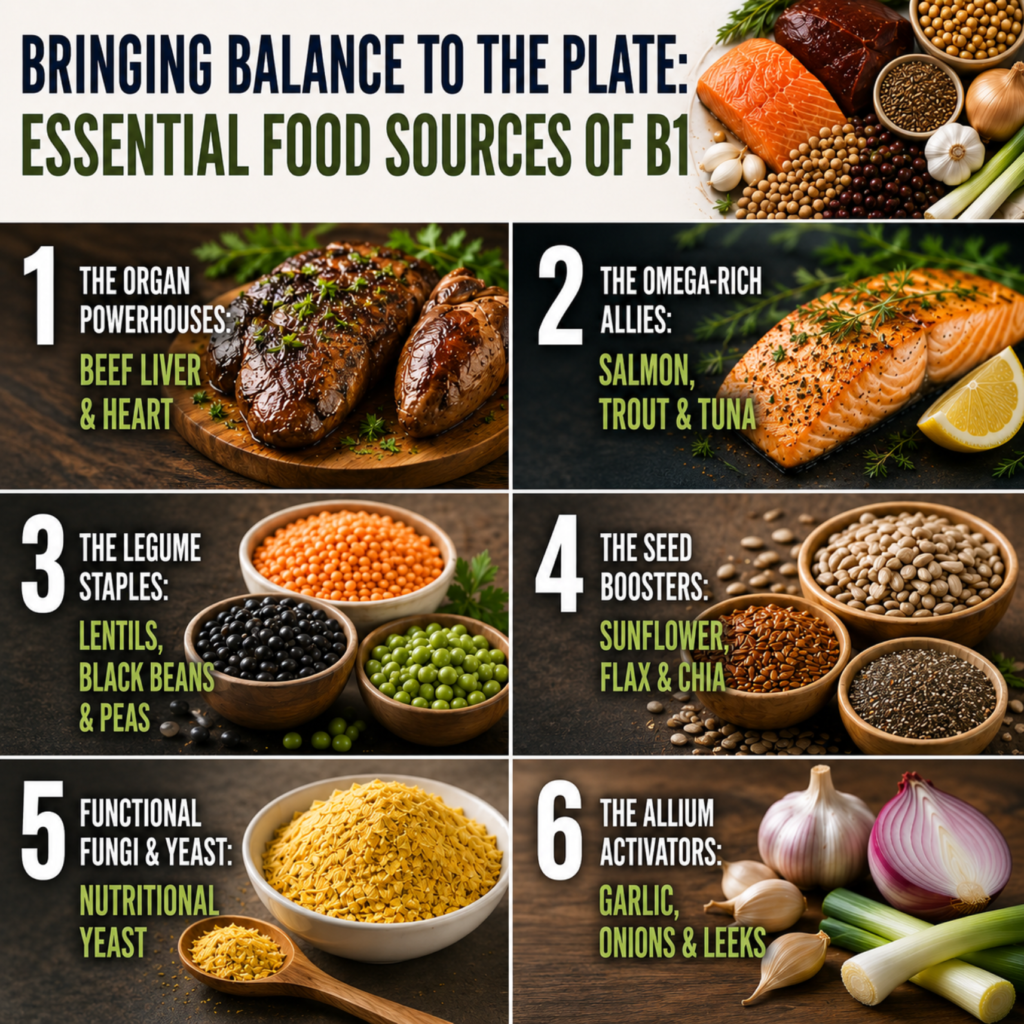
1. The Organ Powerhouses: Beef Liver & Heart
Organ meats remain unmatched in nutrient density. When sustainably sourced, beef liver and heart provide some of the richest natural concentrations of thiamine available.
Why they matter:
- They contain cofactors and enzymes that help convert thiamine into its active form (TPP).
- They deliver B1 in a bioactive, easily assimilated matrix.
- They support mitochondrial ATP production at the deepest level.
This is thiamine as nature intended — paired with the structural intelligence your cells recognize instantly.
2. The Omega‑Rich Allies: Salmon, Trout & Tuna
Fatty fish offer a powerful combination: animal‑based thiamine plus inflammation‑modulating Omega‑3 fatty acids.
Why this synergy matters:
- Omega‑3s support nerve membrane fluidity.
- Thiamine fuels the electrical signaling inside those nerves.
- Together, they create a stable environment for cardiovascular flow and neurological clarity.
Gentle cooking preserves thiamine’s integrity, making fish an ideal choice for daily BioHarmonizing.
3. The Legume Staples: Lentils, Black Beans & Peas
Legumes are a foundational plant‑based source of thiamine — clean, steady, and supportive of metabolic harmony.
Why they matter:
- Cooking dry beans releases thiamine into a highly bioavailable form.
- Their complex fibers feed the microbiome, which influences metabolic balance and nutrient absorption.
- They provide slow, stable energy that complements thiamine’s role in carbohydrate metabolism.
This is whole‑body nourishment that supports both gut and nerve vitality.
4. The Seed Boosters: Sunflower, Flax & Chia
Seeds pack surprising thiamine density relative to their size — especially sunflower seeds, which are among the most potent plant sources.
Why they matter:
- Seeds contain healthy fats that support nerve insulation.
- They deliver magnesium, a mineral that works alongside thiamine in energy conversion pathways.
- Their nutrient synergy helps maintain smooth metabolic signaling.
A handful of seeds can reinforce your daily thiamine foundation effortlessly.
5. Functional Fungi & Yeasts: Nutritional Yeast
Unfortified nutritional yeast is one of the most reliable whole‑food sources of naturally occurring B1.
Why it matters:
- Its vitamin matrix is highly absorbable.
- It supports energy production without overstimulation.
- It can be added to savory dishes to fortify your system throughout the day.
This is a simple, functional tool for maintaining baseline thiamine harmony.
6. The Allium Activators: Garlic, Onions & Leeks
Alliums offer something extraordinary: nature’s own fat‑soluble thiamine derivatives.
The GreenMedInfo Insight
When raw garlic is crushed, an enzyme transforms its natural thiamine into lipophilic allithiamine compounds — the same family of fat‑soluble B1 found in advanced supplements.
Why this matters:
- These compounds bypass standard cellular checkpoints.
- They penetrate nerve tissue more deeply.
- They provide long‑lasting, structural support for neurological resilience.
Ancient cultures didn’t know the chemistry — but they knew the effect.
The Path to Cellular Harmony
BioHarmonizing is not about overwhelming the body with synthetic mega‑doses. It’s about precision, alignment, and communication.
When your system is depleted — whether from modern diets, chronic stress, or metabolic overload — water‑soluble thiamine may struggle to cross the barriers that need it most. That’s where targeted forms like Benfotiamine, Sulbutiamine, Allithiamine, or TPP become powerful tools.
But your foundation should always come from whole foods:
- Organ meats for mitochondrial ignition
- Fish for nerve and cardiovascular synergy
- Legumes for metabolic steadiness
- Seeds for mineral‑fat harmony
- Nutritional yeast for daily reinforcement
- Alliums for natural fat‑soluble activation
By pairing targeted supplementation when needed with thiamine‑rich foods every day, you give your mitochondria the exact fuel they require to restore your natural rhythm.
Modern Lifestyle Stressors That Drain Thiamine (And How to Counter Them)
Thiamine (Vitamin B1) is one of the most rapidly‑consumed nutrients in the human body. It fuels mitochondrial ignition, nerve conduction, digestive rhythm, and metabolic stability. But modern life places extraordinary pressure on these systems — often draining thiamine faster than we can replenish it.
Below is a deep dive into the hidden stressors that quietly deplete B1 every day, and how to counter them using BioHarmonize principles.
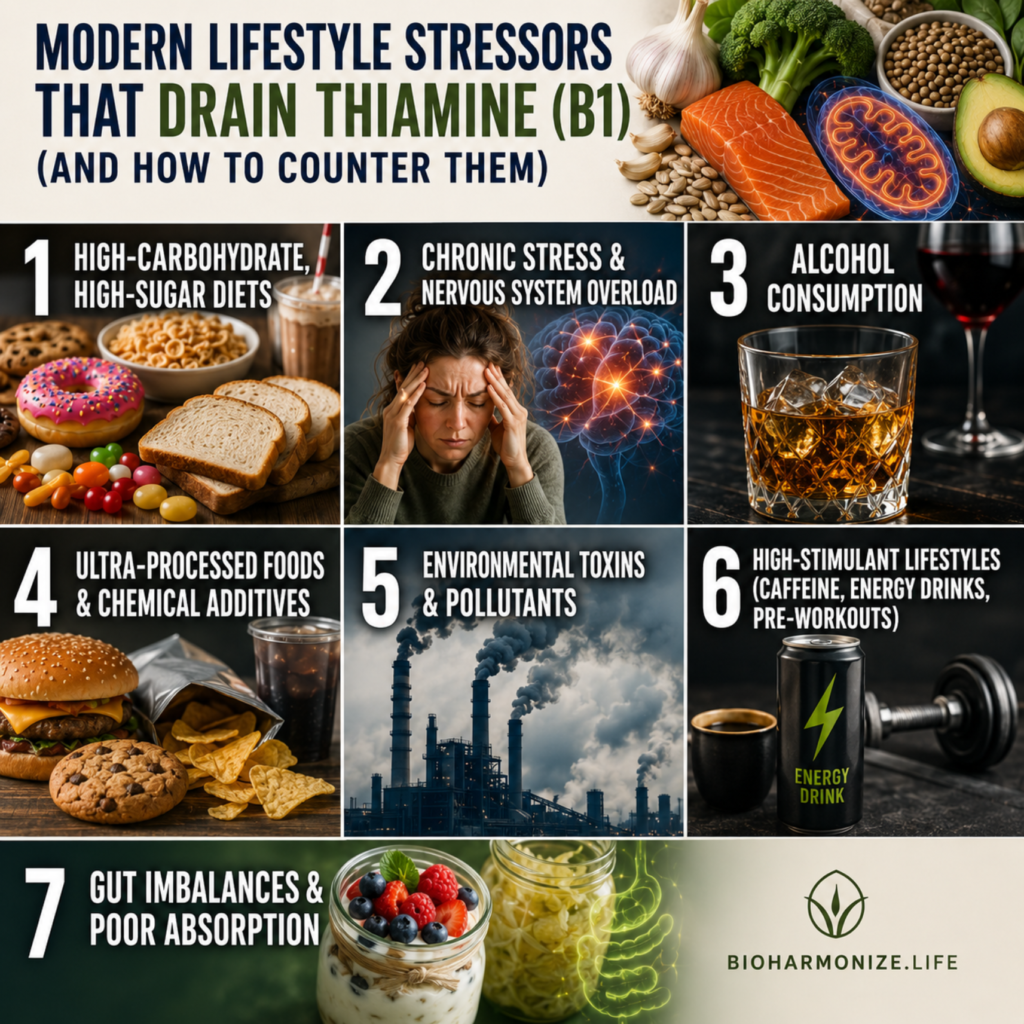
1. High‑Carbohydrate, High‑Sugar Diets
Modern diets are loaded with refined carbohydrates, sweeteners, and ultra‑processed foods. These require massive amounts of thiamine to metabolize.
Why it drains B1:
- Thiamine is required for carbohydrate metabolism.
- The more sugar you consume, the more thiamine your body burns.
- PubMed literature calls this “high‑calorie malnutrition” — overfed but cellularly undernourished.
BioHarmonize Counter:
- Increase whole‑food thiamine sources (legumes, seeds, fish, organ meats).
- Pair carbs with protein and fiber to slow glucose spikes.
- Use Benfotiamine strategically when metabolic stress is high.
2. Chronic Stress & Nervous System Overload
Stress doesn’t just affect mood — it hijacks metabolism.
Why it drains B1:
- Stress hormones accelerate carbohydrate burning.
- The sympathetic “fight‑or‑flight” state increases thiamine turnover.
- Nervous system dysregulation reduces digestive absorption.
BioHarmonize Counter:
- Practice slow exhalation breathwork to shift into parasympathetic mode.
- Use Sulbutiamine when cognitive fatigue or emotional instability is present.
- Reinforce with magnesium-rich foods (seeds, leafy greens) to support thiamine activation.
3. Alcohol Consumption
Alcohol is one of the most powerful thiamine depleters.
Why it drains B1:
- It blocks thiamine absorption in the intestines.
- It impairs liver conversion of thiamine into TPP.
- It increases metabolic demand for B1.
BioHarmonize Counter:
- Increase water-soluble thiamine (HCl or Mononitrate) for baseline replenishment.
- Support liver pathways with whole foods (garlic, onions, cruciferous vegetables).
- Consider TPP when conversion pathways are sluggish.
4. Ultra‑Processed Foods & Chemical Additives
Modern food manufacturing strips nutrients and adds metabolic burdens.
Why it drains B1:
- Additives increase oxidative stress.
- Processed foods lack natural cofactors needed for thiamine activation.
- High sodium and low potassium disrupt nerve signaling.
BioHarmonize Counter:
- Replace processed snacks with thiamine-rich whole foods (sunflower seeds, lentils).
- Increase potassium-rich foods (avocado, beans, squash).
- Use Allithiamine for deeper tissue support when diet quality fluctuates.
5. Environmental Toxins & Pollutants
From plastics to pesticides, modern environments increase oxidative load.
Why it drains B1:
- Detoxification requires ATP — which requires thiamine.
- Oxidative stress increases metabolic turnover of B1.
- Toxins impair mitochondrial enzymes dependent on TPP.
BioHarmonize Counter:
- Support detox pathways with garlic (natural allithiamine), onions, and crucifers.
- Increase hydration and mineral intake to support cellular repair.
- Use targeted forms like Benfotiamine during periods of high environmental exposure.
6. High-Stimulant Lifestyles (Caffeine, Energy Drinks, Pre‑Workouts)
Stimulants create artificial energy spikes that burn through thiamine reserves.
Why it drains B1:
- Stimulants increase carbohydrate metabolism.
- They push the nervous system into sympathetic overdrive.
- They mask fatigue signals that normally protect thiamine stores.
BioHarmonize Counter:
- Replace stimulant dependence with mitochondrial support (TPP + magnesium).
- Use Sulbutiamine for clean cognitive clarity without overstimulation.
- Anchor your circadian rhythm with morning sunlight to reduce stimulant reliance.
7. Gut Imbalances & Poor Absorption
Your gut is the gateway for thiamine — and modern lifestyles disrupt that gateway.
Why it drains B1:
- Dysbiosis reduces nutrient absorption.
- Chronic inflammation damages intestinal transporters.
- Low stomach acid impairs thiamine uptake.
BioHarmonize Counter:
- Increase fermented foods and fiber-rich legumes.
- Use Allithiamine for deeper absorption when gut function is compromised.
- Support digestion with slow meals, chewing, and parasympathetic activation.
The BioHarmonize Perspective: Restore the Environment, Not Just the Nutrient
Thiamine depletion is rarely caused by a single factor. It’s the stacking of modern stressors — diet, stimulants, toxins, stress, and nervous system overload — that creates chronic energy collapse.
BioHarmonizing is about reversing that stack:
- Reduce metabolic drains
- Rebuild mineral and nutrient foundations
- Support nervous system regulation
- Use targeted B1 forms when deeper restoration is needed
When you restore the environment, thiamine becomes exponentially more effective — and your energy begins to rise in a way that feels natural, grounded, and sustainable.